

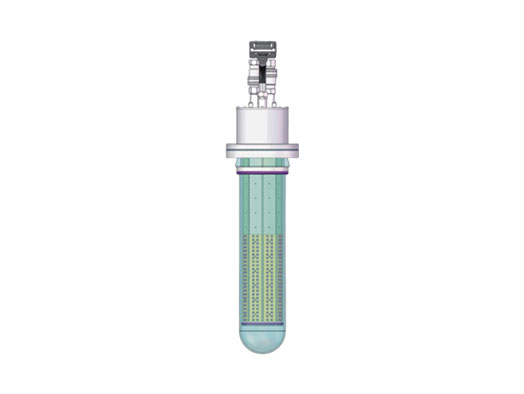
A photochemical reactor is a laboratory system designed to drive chemical reactions using light.
For research labs, development teams, and analytical facilities, choosing the right photochemical reactor is not only
a technical decision but also a long-term investment decision. The right system can improve reaction control, increase
reproducibility, shorten development timelines, and support a wider range of applications such as synthesis,
photocatalysis, polymerization, environmental testing, and materials research.
When evaluating a photochemical reactor for laboratory use, decision-makers should look beyond the initial purchase
price. Total cost of ownership, light source performance, safety features, scalability, maintenance requirements,
and workflow compatibility all influence the real return on investment. This page provides a comprehensive,
SEO-friendly overview of photochemical reactor investment considerations for laboratories, including
definitions, benefits, technical specifications, buying factors, and comparison tables.
A photochemical reactor is a controlled reaction chamber or experimental platform that exposes chemical samples to
specific wavelengths of light in order to initiate or accelerate a photochemical process. These systems are used in
laboratories to study how light interacts with compounds, catalysts, solvents, and gas phases under controlled
conditions. Depending on the setup, a photochemical reactor may use LEDs, mercury lamps, xenon lamps, or other
irradiation technologies.
Laboratory photochemical reactors are typically designed to provide:
Investing in a photochemical reactor can directly influence laboratory productivity and experimental quality. In many
cases, researchers need to validate reaction pathways, optimize yield, improve selectivity, or compare light-driven
reaction behavior across multiple variables. A well-chosen reactor helps standardize those workflows.
From an investment perspective, the most important advantage is that the reactor becomes a core enabling platform.
Instead of relying on improvised light exposure methods, the laboratory gains a dedicated instrument that supports
reproducibility, data integrity, and safer operations. This is especially valuable for labs working in organic
synthesis, photoredox catalysis, fine chemicals, green chemistry, pharmaceuticals, polymer science, and environmental
analysis.
| Benefit | Description | Investment Value |
|---|---|---|
| Improved reproducibility | Controlled wavelength, geometry, and irradiation conditions reduce experimental variation. | High-value for R&D and publication-quality results |
| Faster reaction optimization | Precise control of light exposure allows more efficient screening of reaction conditions. | Reduces development time and labor costs |
| Safer operation | Enclosed design and shielding reduce operator exposure to intense light and heat. | Lowers operational risk and improves compliance |
| Broader application range | Supports multiple chemistry workflows, including photocatalysis, synthesis, and material testing. | Increases equipment utilization |
| Scalability | Some systems support transition from small-scale screening to larger experimental runs. | Improves long-term asset value |
The first and most important consideration is whether the photochemical reactor matches the laboratory’s intended
applications. A system used for small-volume reaction screening has different requirements from one used for
photocatalytic process development or flow chemistry. Buyers should define the target use case before comparing
equipment.
Common laboratory applications include:
The light source is one of the most important technical and financial factors. Different sources offer different
wavelength ranges, lifetimes, power consumption profiles, and maintenance needs. The choice of light source can
determine how effectively the reactor supports specific reactions.
| Light Source Type | Typical Characteristics | Advantages | Considerations |
|---|---|---|---|
| LED | Specific wavelength output, energy efficient, long service life | Low heat, low power consumption, good wavelength control | May require multiple modules for broader wavelength flexibility |
| Mercury lamp | Broad emission with strong ultraviolet output | Useful for some UV-driven reactions | Higher heat, more maintenance, shorter lifespan |
| Xenon lamp | Broad spectrum output, often used for simulation and testing | Versatile spectral coverage | Can require filtering and higher operating cost |
| Laser-based systems | Highly focused and precise light delivery | Excellent control and specificity | Often higher initial cost and narrower application focus |
Wavelength precision is critical in photochemistry. Different molecules absorb light at different wavelengths, and a
mismatch can reduce reaction efficiency or alter the reaction pathway. For laboratory investment planning, it is
important to select a reactor with the wavelength range required by current projects and likely future studies.
A high-quality photochemical reactor should provide clearly defined wavelength output, accurate spectral selection,
and consistent irradiance across the reaction zone. This improves repeatability and supports more reliable research
results.
Irradiance refers to the amount of light energy delivered to the sample area. Uniform irradiation is important because
uneven light distribution can cause inconsistent reaction rates and reduced data quality. Laboratories should
evaluate whether the reactor provides even exposure across all vessels, positions, or channels.
Investment value increases when the system offers:
Many light-driven reactions are sensitive to heat. Excess temperature can lead to unwanted side reactions, solvent
evaporation, or catalyst degradation. A laboratory photochemical reactor should therefore provide some form of
thermal management, such as cooling fans, integrated circulation, or temperature monitoring.
For investment evaluation, temperature control is especially important when the reactor will be used in long-duration
experiments, temperature-sensitive synthesis, or scale-up studies.
Photochemical reactors are available in batch and flow formats, and some systems support both. Batch reactors are
common in discovery research and method development, while flow reactors are often favored for better scalability,
improved heat management, and continuous processing.
Laboratories should consider:
Safety is a major investment criterion for any laboratory equipment, especially systems involving high-intensity light,
UV exposure, heat generation, and electrical components. A well-designed photochemical reactor should include
protective housing, interlocks, and clear user controls.
Important safety features may include:
The best photochemical reactor is not only technically capable, but also practical for daily laboratory use. If the
system is difficult to set up, difficult to clean, or incompatible with common labware, productivity may suffer.
Workflow integration should be considered before purchase.
Evaluate how the reactor fits with:
The following table summarizes common technical and purchasing specifications that laboratories should review before
investing in a photochemical reactor.
| Specification | Why It Matters | Typical Buyer Question |
|---|---|---|
| Wavelength range | Determines whether the reactor can support the target chemistry | Does the system match the absorption profile of the compounds used? |
| Light intensity | Affects reaction speed and conversion | Can the intensity be adjusted and monitored? |
| Irradiation geometry | Influences light uniformity and sample exposure | Is the exposure evenly distributed across all vessels? |
| Temperature range | Protects heat-sensitive reactions and improves control | Can the chamber maintain stable conditions during long runs? |
| Reaction scale | Indicates sample volume compatibility | Can the reactor support the required batch size or flow rate? |
| Footprint | Important for limited lab space | Will the unit fit the available bench or hood space? |
| Maintenance needs | Impacts uptime and total cost of ownership | How often are lamps, LEDs, fans, or filters replaced? |
| Control interface | Affects ease of operation and data recording | Is the user interface intuitive and programmable? |
| Safety features | Essential for operator protection and compliance | What built-in protections are included? |
| Upgradeable design | Supports future research expansion | Can the system be expanded with new modules or accessories? |
The purchase price of a photochemical reactor is only one part of the total investment. Laboratories should assess
both direct and indirect costs over the expected service life of the instrument.
| Cost Category | Examples | Investment Impact |
|---|---|---|
| Initial purchase price | Base reactor unit, light modules, control systems | Immediate capital expenditure |
| Accessories | Vessels, holders, flow cells, tubing, adapters | May significantly affect total setup cost |
| Installation and training | Commissioning, user onboarding, standard operating procedures | Reduces setup time and operational errors |
| Maintenance | Replacement lamps, fans, seals, filters, calibration checks | Influences long-term ownership cost |
| Energy consumption | Power draw during operation | Important for high-throughput or continuous use |
| Downtime risk | Repair time, replacement part availability | Affects productivity and experimental timelines |
A photochemical reactor can deliver strong return on investment when it is used regularly and aligned with the
laboratory’s core research goals. ROI is often realized through faster experiments, better reproducibility, reduced
waste, and more efficient use of researcher time.
The main ROI drivers include:
For many laboratories, the value of a photochemical reactor is not limited to one project. It can become a shared
resource used across multiple research groups, increasing utilization and improving the financial logic of the
purchase.
| Feature | Manual Light Setup | Dedicated Photochemical Reactor |
|---|---|---|
| Reproducibility | Often inconsistent | High and repeatable |
| Safety | Depends on external shielding and operator practice | Built-in safety controls and enclosure |
| Light control | Limited precision | Defined wavelength and intensity control |
| Workflow efficiency | More manual adjustment required | Faster setup and easier standardization |
| Scalability | Difficult to scale consistently | Better suited to structured scale-up |
| Total cost over time | May increase due to errors and inefficiency | Often lower due to reliability and productivity gains |
Photochemical reactors support a wide range of research and testing applications. Understanding the dominant use case
helps determine the appropriate reactor configuration and budget.
| Use Case | Typical Requirement | Investment Priority |
|---|---|---|
| Photoredox catalysis | Precise wavelength selection and temperature control | High |
| Organic synthesis | Reliable batch processing and sample uniformity | High |
| Flow chemistry | Continuous operation and pump compatibility | High |
| Photostability testing | Long-term irradiation stability and monitoring | Medium to high |
| Materials research | Flexible sample formats and spectral control | Medium |
| Environmental degradation studies | Broad usability and reproducible exposure conditions | Medium |
Before purchasing a photochemical reactor, laboratories should complete a structured checklist to reduce risk and
ensure the system aligns with long-term needs.
Budget depends on application complexity, light source type, automation level, and scalability needs. Laboratories
should focus on value, durability, and fit for purpose rather than price alone.
LED systems are often preferred for their energy efficiency, long lifespan, low heat output, and precise wavelength
control. However, the best choice depends on the target chemistry and wavelength requirements.
Light-driven reactions can generate heat that affects reaction pathways, yield, and product stability. Temperature
control improves consistency and helps prevent unwanted side reactions.
Application fit is usually the most important factor. A reactor should match the chemistry, vessel format, scale, and
control requirements of the laboratory’s actual workflow.
This article is structured around high-intent search terms such as photochemical reactor,
laboratory photochemical reactor, photochemical reactor investment considerations,
photochemical reactor specifications, photochemical reactor benefits,
photochemical reactor cost, photochemical reactor safety, and
photochemical reactor for laboratories.
A photochemical reactor can be a high-value laboratory investment when it is selected with careful attention to
application fit, wavelength precision, temperature control, safety, maintenance, and total cost of ownership. For
laboratories involved in light-driven chemistry, the right reactor can improve reproducibility, increase throughput,
and support long-term research productivity. By comparing technical specifications and business considerations side
by side, laboratories can choose a photochemical reactor that delivers both scientific and financial value.
```
MENAMBAHKAN:gedung 7, kawasan industri Z Acer Z Hi, jalan Lian Tang, kota shanghu, nomor baris C, Jiangsu
Telp:0512-65560736 / 0512-65371556
Seluler:+86 13584913897 / +86 13771738377 (Penjualan)
E-mail:jkzdhsm@yeah.net
Situs web ini menggunakan cookie untuk memastikan Anda mendapatkan pengalaman terbaik di situs web kami.
 English
 Español
 Pусский
 Deutsch
 日本語
 한국어
 हिन्दी
 Melayu
 Tiếng Việt



 ada apa
 Telepon
Komentar
(0)