

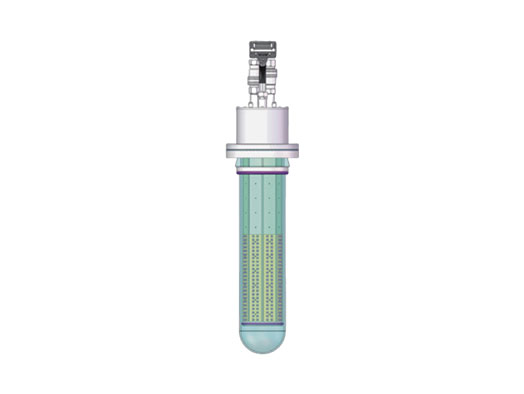
LED photocatalytic reactor system performance testing is a critical process for evaluating how effectively a
light-driven oxidation system performs under real operating conditions. For industries, laboratories, and water
treatment applications, performance testing helps verify reactor efficiency, light distribution, catalyst activity,
mass transfer behavior, hydraulic design, and long-term operational stability. As LED-based photocatalysis continues
to gain attention for advanced oxidation, pollutant degradation, air purification, and water treatment, reliable
testing methods are essential for system validation and optimization.
This guide provides a comprehensive, SEO-friendly overview of LED photocatalytic reactor system performance testing.
It covers definitions, testing objectives, key performance indicators, common evaluation methods, technical
specifications, advantages, influencing factors, and standard data interpretation. The content is written for
industry pages, blog articles, catalog sections, and technical landing pages.
An LED photocatalytic reactor system is a light-assisted reaction platform that uses LED sources to activate a
photocatalyst, usually a semiconductor material such as titanium dioxide (TiO2), zinc oxide (ZnO), or modified
composite catalysts. When the catalyst absorbs photons of a suitable wavelength, electron-hole pairs are generated,
leading to oxidation-reduction reactions that can break down organic pollutants, inactivate microorganisms, or
transform chemical compounds.
Compared with traditional mercury lamps, LED photocatalytic reactor systems offer better wavelength control, lower
heat generation, longer service life, and improved energy efficiency. These systems are often designed for water
treatment, air purification, self-cleaning surfaces, environmental remediation, and industrial process treatment.
Performance testing is the foundation of any LED photocatalytic reactor system evaluation. Without proper testing,
it is difficult to determine whether the reactor is delivering sufficient light intensity, maintaining catalyst
effectiveness, or achieving the expected degradation rate. A system may appear technically complete, but its real
output can vary significantly depending on reactor geometry, LED spectral output, catalyst loading, hydraulic
retention time, and operating environment.
In practical applications, performance testing is used to:
A complete LED photocatalytic reactor system performance test should answer several key questions. How much
degradation occurs under specific irradiation conditions? Is the reactor design efficient in using emitted light?
Does the system maintain performance over time? Can the reactor operate consistently under different flow rates or
contamination loads?
The main objectives of testing include:
| Testing Objective | Description | Typical Output |
|---|---|---|
| Reactor efficiency | Measures how effectively the reactor converts light and catalyst activity into chemical degradation | Removal rate, conversion percentage, reaction kinetics |
| Optical performance | Evaluates spectral output, intensity distribution, and photon delivery | Wavelength range, irradiance, photon flux |
| Catalyst performance | Assesses the activity, stability, and reuse capability of the photocatalyst | Degradation rate, performance decay, recovery rate |
| Hydraulic behavior | Examines flow patterns, residence time, and mixing conditions | RTD curves, pressure drop, turnover efficiency |
| Operational stability | Determines whether performance remains stable during long runs | Time-on-stream data, consistency trend |
| Scale-up readiness | Checks whether the system can be expanded for larger applications | Performance at pilot or industrial scale |
To evaluate an LED photocatalytic reactor system accurately, several key performance indicators should be measured.
These metrics help transform raw experimental data into meaningful engineering conclusions.
Removal efficiency is one of the most common indicators in photocatalytic reactor testing. It is usually expressed
as a percentage of the initial contaminant concentration that has been degraded or removed after treatment.
Formula: Removal Efficiency = [(C0 - Ct) / C0] × 100%
Where C0 is the initial concentration and Ct is the concentration at time t.
In many systems, photocatalytic degradation follows pseudo-first-order kinetics. The apparent rate constant is used
to compare reactor performance under different conditions.
Higher rate constants usually indicate faster pollutant degradation and better reactor efficiency.
Photonic efficiency measures how effectively emitted photons are converted into chemical reaction outcomes. This is
especially important for LED systems, where spectral precision and energy consumption are major advantages.
Energy efficiency evaluates the amount of pollutant removal achieved per unit of electrical energy consumed. This
is a key commercial metric for sustainable reactor design.
Catalyst stability testing checks whether the photocatalyst retains activity after repeated cycles or prolonged
irradiation. A stable catalyst is essential for industrial deployment.
Light uniformity refers to how evenly the LED radiation is distributed across the catalyst surface or within the
reactor volume. Poor light uniformity can create underexposed zones and reduce overall efficiency.
Performance testing of LED photocatalytic reactor systems usually includes a combination of optical, chemical,
hydraulic, and operational parameters. The most relevant parameters are listed below.
| Parameter | Unit | Purpose |
|---|---|---|
| LED wavelength | nm | Defines the emission band used for photocatalyst activation |
| Irradiance | mW/cm² | Measures light intensity on the catalyst surface |
| Photon flux | mol/s or photons/s | Quantifies the number of photons available for reaction |
| Catalyst dosage | g/L or mg/cm² | Determines how much active material is present |
| Initial contaminant concentration | mg/L | Sets the test load for degradation evaluation |
| Residence time | min | Indicates contact duration between light, catalyst, and contaminant |
| Flow rate | L/h or mL/min | Controls hydraulic throughput |
| Temperature | °C | Affects reaction kinetics and LED thermal stability |
| pH | - | Influences catalyst surface charge and pollutant speciation |
| Dissolved oxygen | mg/L | Supports oxidative reaction pathways |
Different test types are used depending on the purpose of the system. A laboratory test may focus on basic reaction
kinetics, while a pilot-scale test may emphasize hydraulic consistency and long-term reliability.
Laboratory testing is used to establish baseline performance under controlled conditions. This stage is ideal for
comparing catalysts, wavelengths, reactor geometries, and irradiation intensities.
Pilot-scale testing evaluates whether the reactor design can maintain performance when the volume, flow rate, or
pollutant load increases. It is an important step before commercial deployment.
Continuous operation tests measure performance over extended time periods. These tests help determine LED thermal
stability, catalyst deactivation, fouling potential, and maintenance requirements.
Comparative testing is used to compare one reactor design against another or one LED wavelength against another.
This is useful for system optimization and product development.
A structured testing workflow helps ensure repeatable and reliable results. The sequence below is commonly used in
LED photocatalytic reactor system performance testing.
| Step | Process | Expected Outcome |
|---|---|---|
| 1 | Define target pollutant and test objective | Clear performance target and analytical method |
| 2 | Select catalyst, LED wavelength, and reactor configuration | Test setup aligned with application needs |
| 3 | Measure baseline contaminant concentration and optical conditions | Reference data for performance comparison |
| 4 | Operate reactor under controlled test conditions | Reaction data collected over time |
| 5 | Analyze sample concentration, wavelength output, and operating stability | Performance curves and kinetic results |
| 6 | Repeat tests for reproducibility | Statistical confidence in results |
| 7 | Interpret efficiency, energy use, and durability | Final system assessment and optimization direction |
LED photocatalytic reactor performance is affected by many variables. Understanding these factors is important for
both testing and system design.
The LED emission spectrum should match the absorption characteristics of the photocatalyst. If the wavelength is
poorly matched, photon utilization decreases and reaction efficiency drops.
Higher light intensity can improve reaction speed, but only up to a certain point. Excessive intensity may lead to
energy waste or heat accumulation. Uniform light distribution is equally important for consistent catalysis.
Catalysts with higher surface area generally provide more active sites. Proper dispersion prevents agglomeration and
improves contact between the catalyst and the pollutant.
The shape and size of the reactor affect photon path length, reflection behavior, and fluid dynamics. Compact
geometries may improve irradiation efficiency, while poorly designed chambers can create dead zones.
Residence time determines how long the fluid remains in contact with the photocatalyst and light field. Too short a
residence time may reduce removal efficiency; too long may limit throughput.
Background components such as turbidity, suspended solids, natural organic matter, or humidity can interfere with
light penetration and reaction pathways.
Temperature affects reaction speed and LED heat management. pH influences catalyst surface charge, pollutant
ionization, and radical formation.
LED-based photocatalytic reactors are increasingly preferred due to several operational and environmental benefits.
These advantages are one reason why testing and optimization are so important for market-ready systems.
| Advantage | Explanation |
|---|---|
| Energy efficiency | LEDs convert electrical energy into targeted wavelengths with lower waste heat |
| Wavelength control | Specific emission bands can be selected for catalyst activation |
| Long service life | LED sources generally provide extended operating hours compared with traditional lamps |
| Compact design | LED reactors can be built in smaller, modular formats |
| Fast start-up | LEDs reach full output quickly without long warm-up time |
| Lower maintenance | Reduced lamp replacement frequency and easier system management |
| Environmental compatibility | No mercury content and improved sustainability profile |
While specifications vary by application, the following table shows common technical characteristics used when
evaluating LED photocatalytic reactor systems.
| Specification Item | Typical Range or Format | Relevance |
|---|---|---|
| LED wavelength | UVA, visible, or narrow-band custom output | Determines catalyst activation efficiency |
| Power rating | Low to high depending on reactor scale | Influences energy input and output intensity |
| Irradiation mode | Internal, external, annular, or submerged lighting | Affects light penetration and reactor geometry |
| Reactor material | Glass, quartz, stainless steel, polymer, or composite | Affects chemical resistance and optical transmission |
| Catalyst format | Suspended slurry, coated surface, immobilized film, or packed media | Changes mass transfer and recovery behavior |
| Operating mode | Batch or continuous flow | Defines testing approach and scale-up potential |
| Control system | Manual or automated | Supports stable operation and repeatability |
| Monitoring instruments | Optical, chemical, and thermal sensors | Enable performance tracking and diagnostics |
Interpreting test results requires more than checking a single degradation percentage. A high removal rate does not
always mean that a reactor is efficient in the broader engineering sense. It is necessary to evaluate reaction speed,
energy input, stability, and scalability together.
A strong LED photocatalytic reactor system usually shows:
If test data show strong initial performance but rapid decline over time, the reactor may require better thermal
control, improved catalyst immobilization, or optimized fluid dynamics. If results vary widely between tests, the
system may need better light uniformity, sampling control, or operating consistency.
Despite the advantages of LED photocatalytic technology, performance testing can be complex. Several factors may
complicate accurate measurement and data interpretation.
| Challenge | Impact on Testing | Possible Mitigation |
|---|---|---|
| Non-uniform light field | Creates inconsistent catalyst activation | Use reflective surfaces and optimized LED placement |
| Catalyst agglomeration | Reduces active surface area | Improve dispersion or immobilization method |
| Heat accumulation | Affects LED stability and reaction behavior | Apply thermal management and cooling design |
| Sampling error | Distorts concentration measurement | Standardize sampling protocol and replicate tests |
| Photocatalyst deactivation | Lowers long-term performance | Assess regeneration and reuse methods |
| Matrix interference | Reduces photon penetration or reaction efficiency | Pre-treat feed or adjust operating conditions |
To obtain reliable and repeatable LED photocatalytic reactor system performance data, testing should follow
structured best practices. These practices improve credibility and help support product development or technical
documentation.
Performance test data are used in many technical and commercial contexts. They support product selection, system
design, optimization, compliance documentation, and marketing content. The most common use cases include:
For content optimization and search visibility, the following keyword phrases are naturally relevant to this topic.
They can be used in headings, body text, metadata, and supporting sections where appropriate.
| Primary Keywords | Secondary Keywords | Supporting Phrases |
|---|---|---|
| LED photocatalytic reactor system performance testing | photocatalytic reactor evaluation | light-driven oxidation system analysis |
| LED photocatalytic reactor testing | photocatalytic efficiency test | reactor design validation |
| LED reactor performance metrics | photocatalyst activity testing | reaction rate constant measurement |
| LED photocatalysis energy efficiency | photocatalytic degradation testing | advanced oxidation performance |
| photocatalytic reactor specifications | reactor optimization | light distribution and catalyst stability |
Below are common terms used in LED photocatalytic reactor system performance testing. These definitions are helpful
for blogs, technical glossaries, and industry pages.
| Term | Definition |
|---|---|
| Photocatalyst | A material that accelerates chemical reactions when activated by light |
| Photon flux | The number of photons delivered per unit time |
| Irradiance | The amount of light power incident on a surface area |
| Residence time | The duration a fluid remains in the reactor |
| Removal efficiency | The percentage reduction of a target contaminant |
| Apparent rate constant | A kinetic value used to compare degradation speed |
| Immobilized catalyst | A catalyst fixed to a surface rather than suspended in solution |
| Continuous flow reactor | A reactor that operates with constant feed and output |
LED photocatalytic reactor system performance testing is essential for proving real-world efficiency, energy
performance, and operational reliability. Whether the application is water purification, air treatment, or
advanced oxidation research, performance testing provides the data needed to validate reactor design and guide
future optimization.
A well-designed testing program should evaluate optical output, pollutant removal, catalyst stability, hydraulic
behavior, and energy efficiency together. By using structured methods and clearly defined metrics, businesses and
technical teams can better understand how an LED photocatalytic reactor system performs and how it can be improved
for higher productivity and stronger long-term value.
MENAMBAHKAN:gedung 7, kawasan industri Z Acer Z Hi, jalan Lian Tang, kota shanghu, nomor baris C, Jiangsu
Telp:0512-65560736 / 0512-65371556
Seluler:+86 13584913897 / +86 13771738377 (Penjualan)
E-mail:jkzdhsm@yeah.net
Situs web ini menggunakan cookie untuk memastikan Anda mendapatkan pengalaman terbaik di situs web kami.
 English
 Español
 Pусский
 Deutsch
 日本語
日本語 한국어
한국어 हिन्दी
 Melayu
 Tiếng Việt



 ada apa
 Telepon
Komentar
(0)